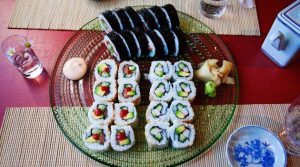
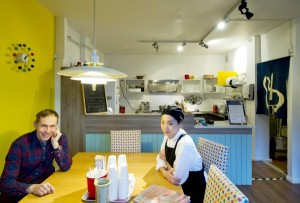
I am going to have pop-up restaurant with chief chef of Tokyo Kikunoi Mr. Ryohei Hayashi in Helsinki.
The pop-up restaurant will be at Ravintola Sunn from 12.7 to 16.7. Our tasting menu (65 euros) concept is “Japanese cuisine meets Finnish nature”. The dinner start at 19:00 each night.
I am so glad to serve my cooking for you again in Finland. Welcome to taste real Japanese cuisine!
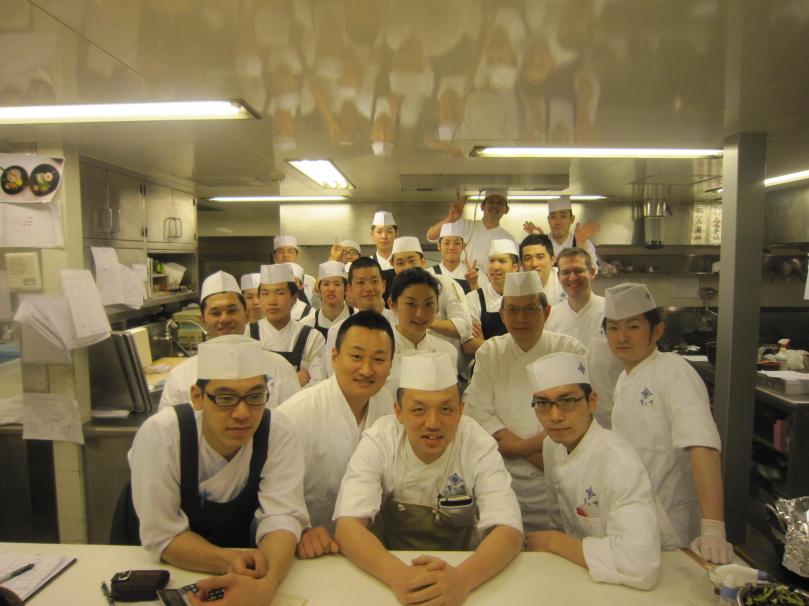
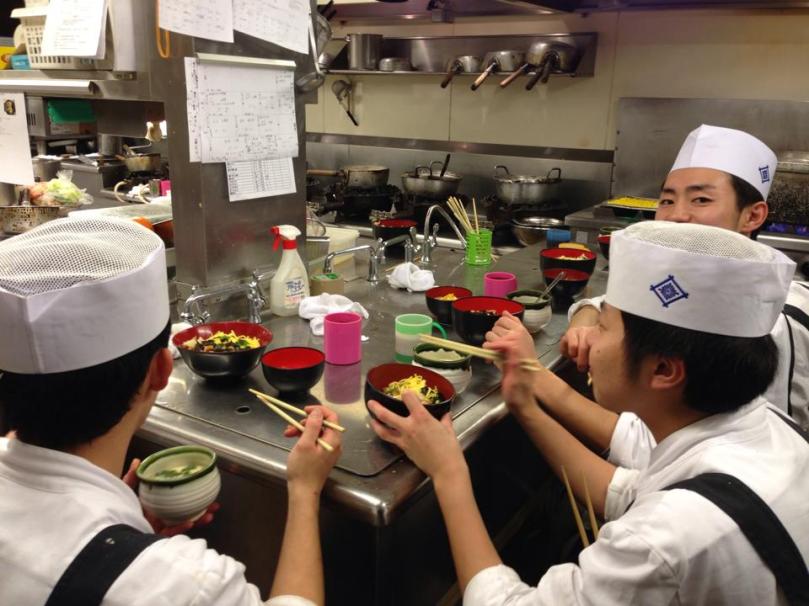
My colleages eating my staff meal in Kikunoi’s kitchen
My favorite job in Kikunoi was to make the staff meal.
Actually the only chance to cook as a 1st year worker was making the staff meal. I cannot say I learned how to cook Kaiseki dinner at Kikunoi, but I can say I learned Kyoto’s home cooking through making the staff meal at Kikunoi.
We make the staff meal for 45 – 50 people once a week by turns. Staff meal is for cooks, waitresses, office staff and owner’s family. When it is my turn, I have to plan a menu for lunch and dinner. Since I need to make a large amount of balanced meals in a limited time on a budget, I needed to plan well in advance.
My young colleagues liked meat dishes. I liked to use vegetables, beans and fish. Therefore my food was popular among the waitresses. Often I got compliments from the waitresses “Your food is colorful and looks good.”. I believe good looking is as important as good taste.
The owner’s mother is supervisor of the staff meal. She is more than 80 years old and was the former Kikunoi’s landlady. She already retired because she broke her knees by working hard. She is still very sharp though. Owner’s wife is the landlady now. Everybody calls owner’s mother “Ookami-san” which means grand landlady.
Ookami-san lives next to the kitchen. The evening before, I shouted at the Ookami-san’s door “Hello! I’m 1st year worker Sari. Can I come in?” . She is a little hard of hearing. She answered “Come in” if she doesn’t talk on the phone or isn’t watching an interesting T.V programme. She was always sitting at the dining table and watching T.V in the evening. I sat down with her and we talked about staff meal menu for the next day.
Ookami-san gave me advice about Kyoto’s traditional home cooking recipes and taught me Kyoto’s tradition. For example, we eat simmered tofu refuse called “Okara” at the end of month and we eat grilled fish with the head at the beginning of month in Kyoto. We also eat certain seasonal dishes in Kyoto. She told me each tradition’s history and meanings.
She always kept small sweets for me. She liked to talk while I was eating sweets. I loved to listen tp her old memories. She was really good storyteller. The time I spent with Ookami-san was a gem of my Kikunoi’s experience.
The staff meal day in the morning, I work with others until cleaning and preparation is done. I go shopping for staff meal around 8:30. (However since I fell from the motor bike when I went to shopping, I was too afraid to drive anymore. I asked one of my colleagues to go to shopping.)
I made the staff meal in a small kitchen dedicated for staff meal. The lunch has to be ready at 11:30. I have about 2 hours to go.
When lunch is ready, first I tell Ookami-san’s maid “Micchan” who takes care of Ookami-san. Micchan is around 70 year old, cheerful lady who has worked for Ookami-san for more than 40 years. Micchan brings food to Ookami-san. Everyone eats lunch at different times. Therefore I also have to think how to serve food in the best condition for all. Hot meals should be hot and cold meals should be cold.
After everybody had lunch around 16:00, immediately I started to make dinner for staff. It has to be ready at 19:00. I have about 3 hours to go. It sounds like a lot of time, but it’s not. Imagine if you need to peel 5 kg of potatoes and cook them. You also have to make soup and a side dish as well in 3 hours. I was always in hurry and thinking how to make it faster and of course tastier.
When I made staff food, always senior worker would check the flavor and quality. In the beginning, I had no idea what was missing or what was too much in flavor and how to fix it. However little by little, I learned how to balance the flavor from the experience of making staff meals. I learned each traditional dish has a golden ratio of seasoning.
When dinner is ready, I bring the dinner to Ookami-san first. She gave me feedback of my cooking. Usually Ookami-san liked the food I made. However 1 dish I could not make her happy. It was simmered freeze-dried tofu called “Koya-dofu”. I tried a couple of times to make it. However each time Ookami-san said “It should be more sweet”. One day she asked me to come to her kitchen. She made Koya-dofu and let me taste it. It was way too sweet for me. It was almost like sponge cake. Sugar was precious in old times, people crave for sweet flavor at that time. Therefore some of Kyoto’s traditional dishes are very sweet. It was an interesting fact.
Once a T.V reality show came to film us. My colleague who worked for Alain Ducasse in Paris, foreign trainee from Lebanon and I made special staff meal for the owner chef of Kikunoi Mr. Murata in this T.V show. I made Finnish traditional salmon soup Kyoto style “Lohi keitto a la Sari”. Mr. Murata enjoyed it.
I made my last staff meal on my last day at Kikunoi. The chef who worked at Kikunoi for more than 30 years told me “I felt your love from your staff meal”. It was so sweet! Because he is a really shy guy.
Also one senior worker said to me “Usually I eat much more, but even I wasn’t hungry. I didn’t need to eat your staff meal too much. Because it fulfilled not only my stomach, also my heart.”.
When I was cleaning the staff meal kitchen at the end of last day, one of my colleagues came to me. He was the most defiant boy and I was often angry at him. He apologized to me “I am sorry. I didn’t listen to you. It’s because I was too childish.”. I hug him and almost cried “It’s all right!”.
The cooking is not only just making food to me. Cooking represents my love for beloved people. I believe my love came across well via my last staff meal. I am so grateful to all of Kikunoi staff. They let me be part of the team.
My last staff meal:Fried tofu chirashi sushi, savory steamed egg custard with chicken, fried mackerel with grated radish source.
One cold morning in March of 2013, I was in front of Kikunoi’s kitchen at 6:00.
Next to the kitchen is owner’s mother’s house. Next to owner’s mother’s house is owner’s house. The worker’s domitory is at the end of these houses. Kikunoi’s workers live in the domitory for the first 5 years. This is a family business. The owner’s family treats the workers as part of their family. I did not live there. I lived in my parents house.
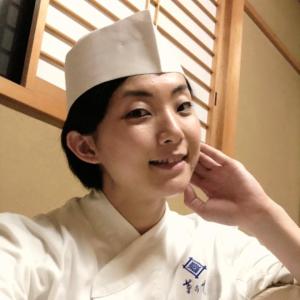
I just started work in Kikunoi as a new worker. I was the first and only woman cook in Kikunoi. 6 young boys who is at the age of 18 – 20 years old started at the same time as me.
My colleague boys rushed out from the domitory while everybody else was still in the bed. Our busy day starts again. First we clean the kitchen and prepare for senior workers. Then we scale and clean the fish. Occasionally we cleaned hundreds of fish. We have to be ready before the senior workers come to work around 8:00 to 9:00.
Japanese traditional kitchen has its own hierarchical system. First year workers are called “Oimawashi”. We do all kind of subordinate work like cleaning, washing tools, making staff food and assistant jobs.
We eat staff lunch all together after lunch service. It is usually around 15:00. After staff lunch, cooks take small break except us. We needed to wash dish and prepare for dinner service when others have break. We could take 10 minutes rest if we were luckey.
Afternoon work start at 16:00. After dinner service, we clean the kitchen and eat staff meal together. We have meeting at the end of the day at 23:00.
But that is not all. 1st year workers cannot go home before senior workers leave. We needed to help senior workers’ prep jobs. We went to home no earlier than 24:00.
Usually we work 6 days a week. However sometimes we worked consecutive 2 weeks when restaurant is busy.
We had incredible amount of complicated preparations. Our days ware extreamly long. We could sleep 3 to 4 hours a day. I was thinking about going to bed 1/3 of the day.
What was most challenging was to conquer my weakness. The skin of my hands peeled off after 2 weeks. Because I process fish and wash dishes so much every day. Also I had accidents at work because I was too exhausted. I fell from the motor bike when I went shopping for making staff meal. And I drop hot oil on my foot. I got serious burn.
The extreme situation reveal person’s true character. I met new Sari who I have never seen. I became irritable and sarcastic too easily. I never lost my temper at work before. But often I was angry at young colleagues.
I never forget about some of the senior workers who were considerate about my condition, they even work harder than me. I learned from them that I have to be kind and fair to others in any situation.
One of my colleagues had disappeared in April. He fled in the middle of the night. But after 3 years, 3 of my colleagues are still working in Kikunoi out of 7.
In fact, the cooks there sacrificed a lot for work. They shortened their life to work as cook. This is just cruel. I believe Japanese traditional cuisine restaurant working system should change. Otherwise, nobody would like to work in this industory in future.
At the same time, I am grateful to Kikunoi’s owner Mr. Murata who gave me this opportunity. All of Japanese cuisine chefs went through this kind of hard time at the beginning of their career. It was more of a mental training than a training for learning Japanese cuisine for me.
Sebastian drove me to work every morning and came to pick me up every night. I could not work in Kikunoi without Sebastian’s support.
This experience was the most difficult for me to write. However I will continue a bit more about my experience at Kikunoi next time.
I had a pop-up restaurant project with Sebastian in Billnäs in the summer of 2012. It was after vocational training in Kikunoi.
Billnäs is a quiet and small village in the south of Finland, 1 hour by car from Helsinki. It was built around ironworks factories by the river in the 16th century. They have a big antique market in the old ironwork factory for one weekend every summer.
The idea came from Sebastian’s father Leif. Leif has 100 year old beautiful brick barn in Billnäs. The Billnäs antique market has more than 10,000 visitors, but there are too few restaurants. Leif asked me and Sebastian if we wanted to try something for the antique market in his barn.
We renovated the barn by ourselves. We made the kitchen, dining hall and bath rooms. Leis is an excellent master builder who specializes in old houses renovation. Sebastian is also very good with his hands. I like the painting part of renovation.
First I imagined what my customer base of Billnäs antique market would be. I thought many of them will be families and middle aged Finnish couples who never tried Japanese food before, and conservative about eating out. Since their purpose is an antique market, they will look for a quick lunch and wouldn’t choose anything fancy.
I decided to have a fast food pop-up restaurant. I wanted to give a bit more than what people would expect. My idea was to use local organic ingredients to make burgers and hotdogs with a japanese twist. The name of a pop-up restaurant was”BB Burger”. BB means Billnäs Bruk.
The slow food movement was growing in Finland at that time.We looked for the local producers. It was not easy to communicate with them. However we could find very nice products. Our hamburger pâte was made from 100% Pargas gård organic beef. We used West Chark organic sausage for hot-dog. And the vegetables came from Svarfvars organic farm. Our buns were made by Backers Baker. I ordered to baker to make different kinds of prototypes. I chose organic spelt bread.
I planned a simple menu, but it was still difficult to decide recipes. Because I don’t eat fast food in general. Our menu had Teriyaki hamburger with wasabi mayonnaise, hot dog with curry cabbage and chili sin carne for vegetarian choice. Sebastian had a great idea to make a special potato side dish. Leif’s girlfriend Sanna made mouth watering chocolate cakes.
We invited the neighbours for testing on opening day in the end of June. And we asked guests to answer the enquete about food quality and price. Also we checked kitchen and service operation. I was chef in the kitchen. Sebastian was responsible for service, accounting and making charcoal grilled potato fire place. Leif, Sanna and their neighbor came to help washing dishes.
We had BB burger for 4 days in July 2012. We expected about 100 customers per day. In reality, we had more than 600 customers in 4 days. There were long line at lunch time. I got up at 6:00 in the morning and went to bed at midnight everyday. Still I could not make enough portions, we sometimes needed to say “sold out”. We succeeded in attempting on organic fast food with a japanese twist pop-up restaurant idea. I just wish I could have been more ambitious and prepared more portions beforehand.
There are some blog articles about BB burger by customers.
It was great to see people’s happy faces. I thought this must be one of the most wonderful job in the world. Good food can make people so happy. I was physically tired but satisfied. My dream of open my own restaurant was strengthened by this experience.
Special thanks to Leif and Sanna. We could not do this projects without their support. It was an unforgettable summer weekend. Since they live there I feel at home in Billnäs.
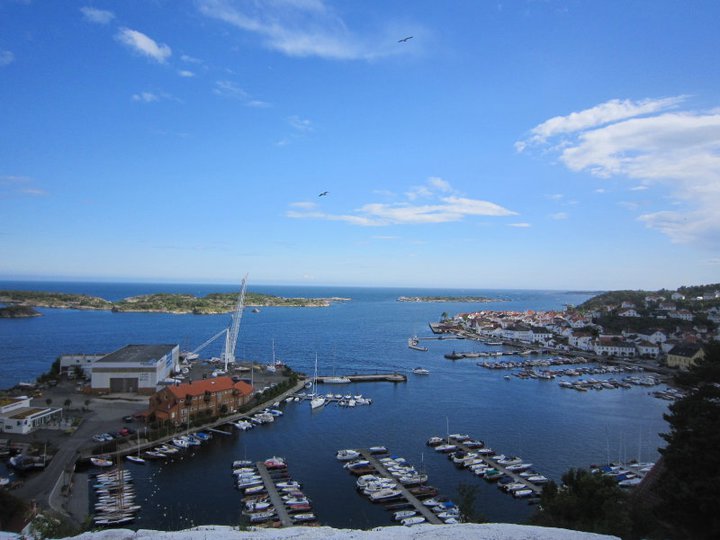
Back in the summer of 2011, I was in a beautiful small town called Risør in the west coast of Norway. Sebastian and I were invited to open a pop-up sushi restaurant for the International Chamber Music Festival in Risør. Because there will be guests from all around the world and they ask for sushi. We stayed in Risør for a week.
This was our first experience of having a pop-up restaurant project.
The pop-up sushi restaurant was opened in a small restaurant of Risør Fiskemottak which was a direct sale fish shop. They had a small fishing port behind the shop. Local fishermen bring fresh fish every morning.
Risør Fiskemottak
The idea was not only having a pop-up sushi restaurant, it was also to teach sushi making method to chef of Fiskemottak restaurant. Therefore the owner bought all kinds of sushi equipment. But chef wasn’t too interested in making sushi. I wonder if they include sushi in menu after I left.
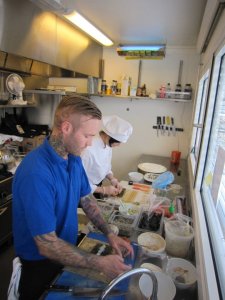
in Fiskemottak kitchen
They hired one Icelandic assistant sushi cook for me. He had kiss mark tattoos on his head. I asked him “Whose kiss marks are those?”. He answered “Marilyn Monroe’s!” He used to work in a sushi restaurant in Reykjavík. Sushi restaurants are really everywhere in the world!!
I made a menu and recipe for the project. It was so luxurious to have fresh local fish as much as I wanted every day. There were wild salmon, monkfish, mackerel, all kind of flat fish, oysters, shrimps and lobsters! I could also get a fresh whale meat. I still remember those fish and whale taste in my mouth.
They eat whale steak in Norway. I made raw whale nigiri sushi with grated ginger on top. The local customers said “I never had this good of whale”.
I realized that fishermen bring monkfish but I have never seen the monkfish liver there. I asked one fisherman “where is the liver of monkfish?”. He answered “I process the monkfish immediately after I catch them on the boat to keep fresh. I throw away the liver into the sea.” I couldn’t believe his answer. We think liver is the best part of monkfish in Japan. I asked him to bring the monkfish liver to me. I sautéed them and made gunkan sushi. That tastes like high quality foie gras. It melted in mouth.
My Japanese style marinated mackerel “Shimesaba” was also popular. One night, the Icelandic cook was fishing behind the restaurant after work. I saw many mackerel on the ground around him. He said “I don’t even need bait. I just hang the fishing line into the sea and catche the mackerel”. Then he landed another mackerel. I made shimesaba using them. No wonder, why I find Norwegian mackerel everywhere even in Japan.
Sebastian was head waiter in the pop-up sushi restaurant. He speaks Norwegian because he used to live in Oslo. He was very good of selling sushi and sake! Did you know? Norway is the only country which makes the sake in Europe. They import Japanese sake rice and brew there. The sake is called “Nøgne Ø (裸島)” which means the naked island. It was an interesting sake.
Sari in local news paper articles
Our pop-up sushi restaurant was big news in a small town. The local news paper came to interview me. She wrote “Real Japanese sushi” in heading of an article. We had not only music festival guests as customers, also locals from all around the area.
One customer asked me to come to the table. She was a gorgeous Spanish lady. She told me “I have been eating in best Japanese restaurantss all around the world. However your sushi is the best , even better than NOBU’s sushi.” and shook my hand. I said thanks to her but felt ashamed very much. What is worse, she was not the only one to give me this kind of compliment. I felt I cheated customers. Because I was still a culinary school student and quickly learned sushi making method from Kabuki’s chef. This experience was a great motivation for me to study Japanese cuisine in Japan.
We were super busy but still we could go to some concerts after work at the Chamber Music Festival. It was splendid! I was nervous to serve my sushi to the festival organizer Leif Ove Andsnes who is famous pianist. He was very nice and liked my sushi. I went to his concert in N.Y carnegie hall after some years.
I am grateful to the nice people I met in Risør. Especially thanks to Kristofer who invited us and allowed us to stay in his house.
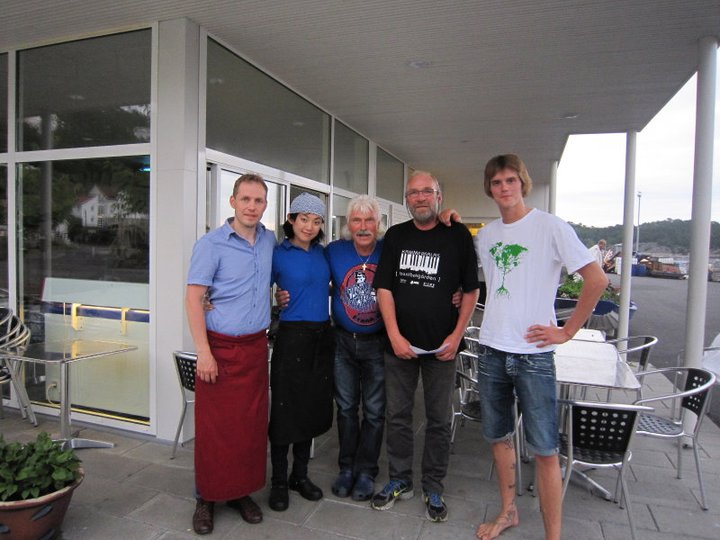
Risør Fiskemottak staff, local fisherman, Sebastian and Sari.
I will write about 2nd pop-up restaurant project in Billnäs, Finland next.
Kikunoi is a traditional kaiseki restaurant in Kyoto which has 3 Michelin stars and 100 years of history. I was a trainee for 3 months in 2012.
Kaiseki is a traditional multi course dinner that originates from tea ceremonies in the 16th century. The kaiseki course include many small dishes which uses seasonal ingredients. I believe Kyoto is the cradle of the Japanese culture as well as of kaiseki.
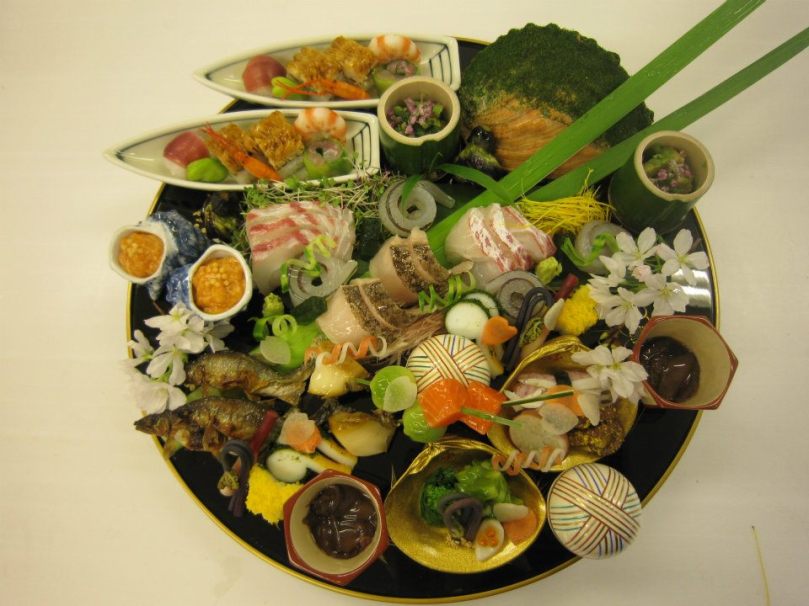
Assort of hassun and mukouzuke spring and summer theme
The owner of Kikunoi is Mr. Murata, 3rd generation chef. He is declaring his life’s work as “accurately communicating Japanese cuisine to the world”. That was the reason he took me as trainee. I wrote in my cover letter “I want to open my own Japanese restaurant in Finland in the future”.
Mr. Murata had been collaborating with kyoto city to add “Washoku: Traditional Dietary Cultures of Japanese Cuisine” to the Intangible Cultural Heritage (ICH) of UNESCO list for many years. It was officially registered on the ICH list in 2013.
In the same year, officials in the city of Kyoto decided the state had approved a special measure that will permit foreign chefs to work at traditional japanese restaurants for longest 2 years. This idea also came from Mr. Murata.
I respect him a lot. Later on when I face new challenge, I always remember his words “always cook for the public benefit not for oneself”.
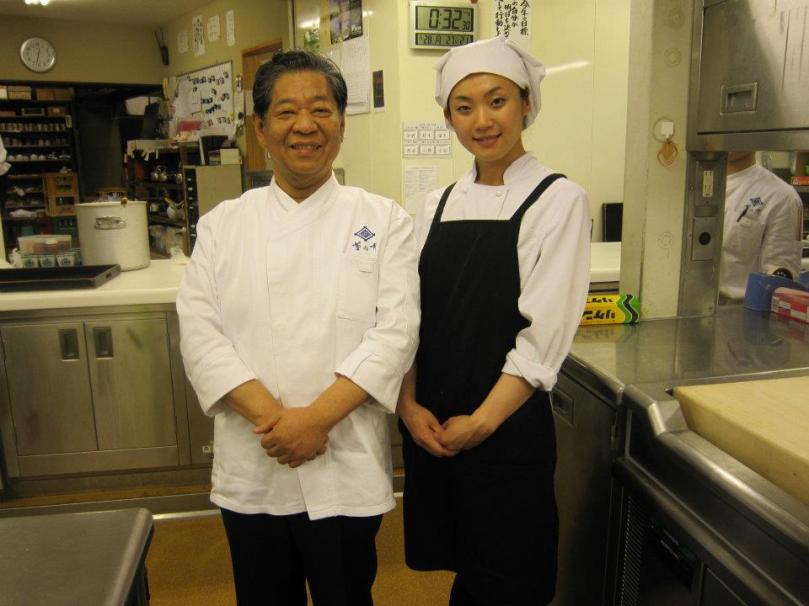
Sari and Mr.Murata in Kikunoi kitchen
The restaurant Kikunoi is located in a beautiful old area of eastern Kyoto in the mountains. There are famous temples and shrines in the neighborhood. Kikunoi has 11 private rooms and 2 banquet halls. Each room is decorated differently and has garden view.
The four seasons are distinct in Japan, we value the sense of season. The restaurant changes tableware and interior every month according to the season. The seasonal flowers bloom in their garden. Moreover they put bell cricket in the garden at the beginning of autumn. The bell cricket sounds provides a natural background music for dinner.
I have been a customer at Kikunoi several times. The food was always impressive. The experience was not only about good food but also about valuable architecture, the luxury facilities, their beautiful tableware and the warm hospitality. Mr. Murata consider kaiseki restaurant to be an “amusement park for adults”.
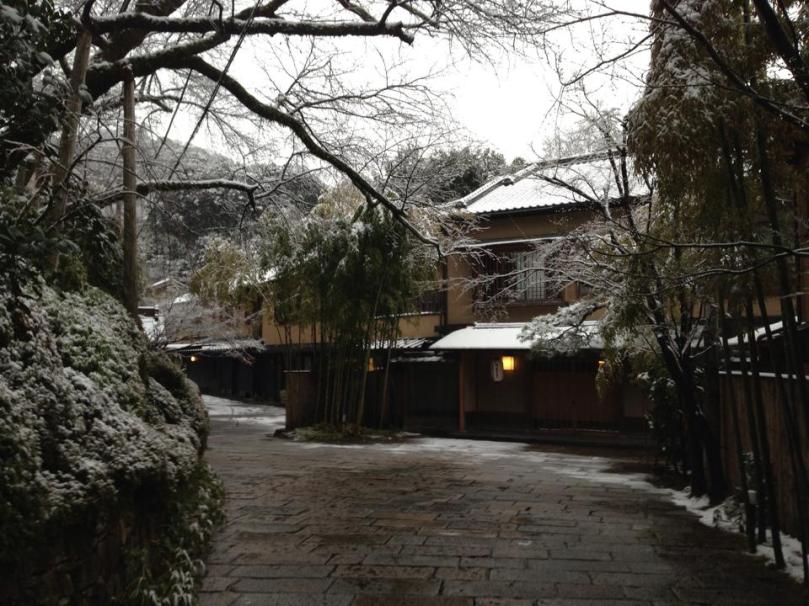
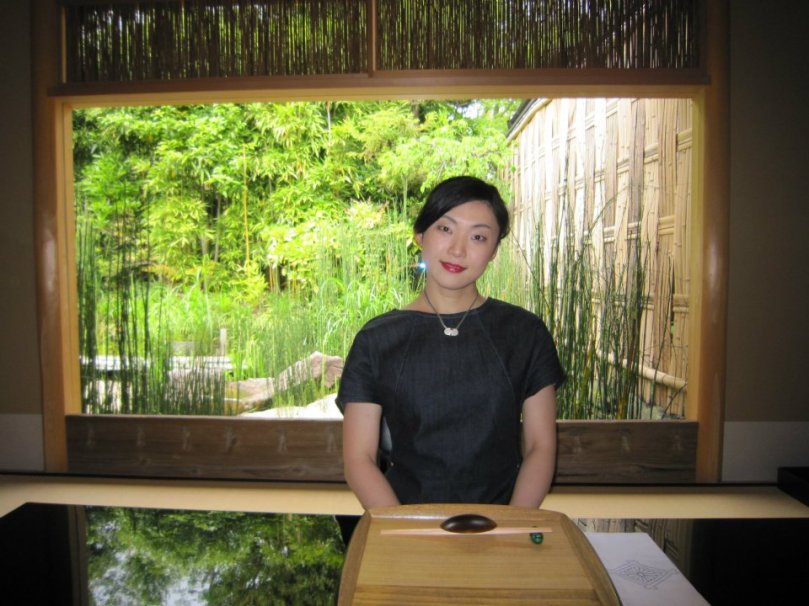
Kikunoi’s entrance in winterSari having lunch in Kikunoi’s private room in early summer
Kikunoi is quite a unique restaurant in Kyoto. Kikunoi does not only seeks to uphold tradition, but also aware of the need to incorporate new ideas and techniques. Their dishes are very traditional but sometimes use western ingredients like foie gras, truffles and cheese as well as local ingredients to increase flavor.
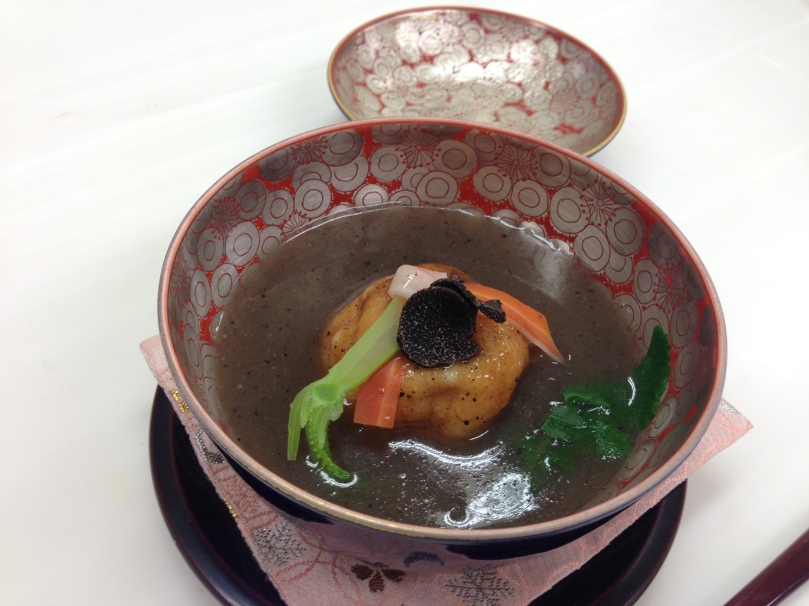
Lily bulb dumpling stuffed with quail and foie gras with black truffle and dashi sauce.
They are member of academic society in a university that studies about umami. I never thought about cooking as being so scientific before.
When I came into the kitchen the first day, I noticed that there were more than 25 cooks working but I was the only female in the kitchen. However I wasn’t afraid. They were kind to me. Kikunoi’s kitchen had a very international environment. There were Korean and American cooks in the kitchen. The chefs from all around the world came to learn in Kikunoi’s kitchen for a few days to a couple of weeks. (A Finnish famous chef Hans Välimäki was also there before me.)
My task in Kikunoi as a trainee was to peel the beans, cut the vegetable or clean the shrimp. I did these kind of small preparation job for 12 hours per day for 6 days a week. I was always so happy and excited. There were 100 new things to learn.
Kikunoi kitchen staff and Sari
It was way too short a period. I just learned I didn’t know anything about Japanese traditional cuisine. I asked Mr. Murata If I could work in Kikunoi after I graduated from culinary school to learn more. I was very lucky, he accepted me. He never hired a female cook before.
After training period, I went back to Finland to continue studying. I will write about my experience of pop-up restaurant projects next before I continue writing about work experience in Kikunoi.
I started my career in a restaurant when I was 29 years old. It was after I moved to Finland in 2007. Before I moved to Finland, I was working as web designer in Japan for 8 years.
I went to a public language school to learn Finnish language. The vocational training place from the language school was a Japanese restaurant named Kabuki in Helsinki. That was my first opportunity to work in a restaurant kitchen in my life. I started my career as a dishwasher in Kabuki. I did not know anything about restaurant work and could not speak any Finnish at that time. It was fun to see kitchen work while I wash dishes. After the training period ended, I asked the owner of Kabuki that I want to work as a cook. However he gave me a waitress job. I made staff food and helped with kitchen work additional to the waitress job. After half year, I started work in both kitchen and hall.
The owner of Kabuki was a unusual Japanese man called “Aki-san” who moved to Finland in the 70’s. He said he came to Finland via Russia by train. Because he wanted to go to the Rolling Stones concert to UK. Then he ended up in Finland. He loved good food, music, life and people. He treated customers as his friends. The restaurant was always full. Customers appreciated Aki-san’s restaurant because of his personality and charisma. They are big fan of Aki-san.
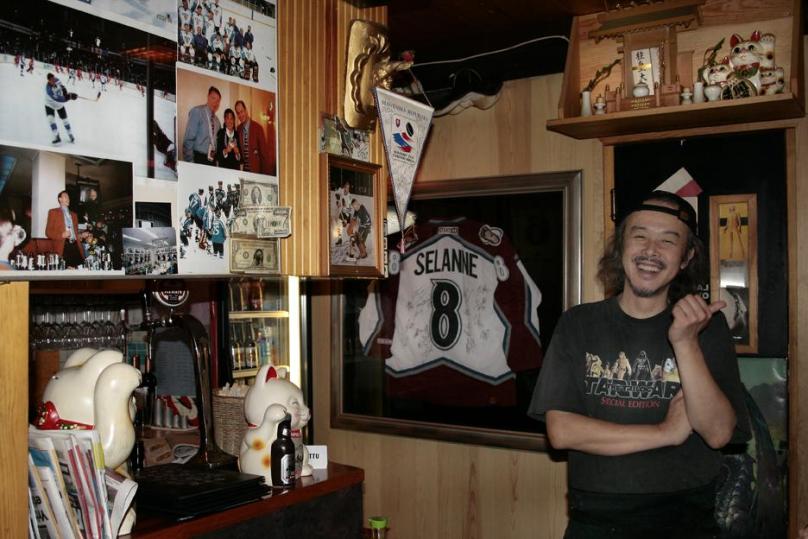
Aki-san in Kabuki. Photo by Liisa Karvonen
He passed away at the age of 53 from cancer. His daughter continued Kabuki. I miss him a lot. I learned the essence of a restaurant business from Aki-san. The co-workers from Kabuki are my best friends in Finland. We shared good times.
Helsinki Culinary School Perho
I applied to the international class of Helsinki culinary school Perho when I was 32 years old. This was highly competitive and most popular culinary school in Finland. The last question in the entrance interview was like this. “… I understood how it will be good for you to study in our school. What is the merit for us if we take you as our student?” I answered. “You will have one more top chef from your graduated students.” The teacher smiled and I passed the entrance exam.
The school life was great. I had classmates from 10 different countries. My teacher was a wonderful Greek man named Akis. I graduated in 2012, but returned to school last Autumn to teach Sushi making in Akis’s class for my juniors.
Sari at Helsinki culinary school Perho
I learned all kinds of Western cuisine at school. And got to know many different home cooking from foreign classmates. I went to vocational training in a 1 michelin star restaurant called “Postres” in Helsinki in the first year of study.
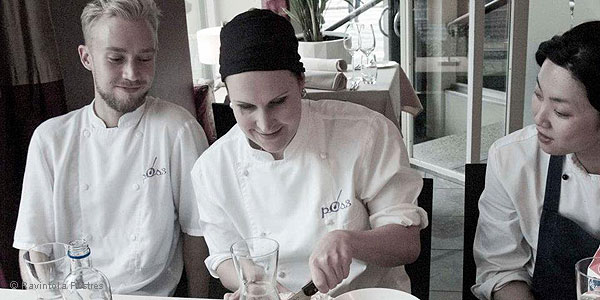
Photo from Postres
I wanted to learn more about Japanese cuisine. However there was no place to learn Japanese cuisine in Finland. We had international vocational training period in the second year before graduation. I asked the principal if I could go to Japan for vocational training. Luckily my principal accepted my wish.
I sent letters to 10 different Kyoto’s traditional Japanese restaurants. Because originally I am from Kyoto and I believe Japanese cuisine culture started from Kyoto. In fact, nobody replied except Kikunoi which has 100 years of history and 3 michelin stars.
I studied at Helsinki culinary school Perho from 2010 – 2012 and I worked in the Japanese restaurant Kabuki in Helsinki from 2008 – 2013. It was tough to study full-time and work in the evening for 2 years. Still I enjoyed it a lot, because I love cooking so much.
I am grateful to Sebastian who advised me to study and always supported me.
I will write about my experience in Kyoto next time.
Many customers asked me how to make this fish cake. So I would like to share with you. We call fish cake “Satsumaage” in Japan. It could be made from all kind of fish. This recipe is my original, using Finnish local pike (Hauki). If you don’t find squid, you can make without squid as well. In that case, please use 1 kg of minced pike. Or try to use other fish.
I serve with wasabi or yuzukosho. The yuzukosho is the paste made from yuzu peel and green chili. It goes very well with fish cake. You can find yuzukosho in Tokyokan.
Satsumaage – Sarin kalapulla
(About 20 fishcakes)
Ingredients:
800 g Minced fresh pike
200 g Squid
20 g Salt
40 g Sugar
40 g Potato starch (Pernajauho) + Cold water 50 g
1 Onion
1 Carrot
5 leaf of shiso (japanese basil) or chive (ruohosipuli) or spring onion (kevätsipuli)
2 tablespoon Fresh ginger juice (grated and squeezed fresh ginger)
Vegerable oil for deep frying
1.
Chop onion and carrot finely. Cook them in micro until soft. Also chop shiso (japanese basil) or chive (ruohosipuli) or spring onion (kevätsipuli) finely.
2.
Grate ginger and squeeze to get 2 tablespoons of ginger juice.
3.
Chop squid finely and use food processor or barmix to make chunky paste. It does not have to be smooth paste.
4.
Mix 800 g Minced fresh pike and 200 g squid paste in the big bowl and add salt and mix it well until mixture become sticky with spatula. I use kitchenaid flat beater.
5.
Mix 40g potato starch and 50 g cold water well in small bowl. Add potato starch water into minced fresh pike bowl. Also add sugar and ginger juice. Stir them well.
6.
Add cooked carrot, onion and chopped fresh shiso (japanese basil) or chive (ruohosipuli) or spring onion (kevätsipuli) into a mixture. Combine them well.
7.
Heat up vegetable oil in deep frying pan to 150 c.
8.
Take some vegetable oil in hand (to prevent the fish cake sticking to hands) and form the fish cake about 1 cm thick round cakes. It about 40g each. Then drop them into the oil and fry 2 mins each side. Serve warm or cold with wasabi or yuzukosho.
This is one of most popular dish of my restaurant. I make also with tofu same way. “Agedashi” means deep fried and served in dashi sauce. It is old traditional dish of Japanese cuisine.
You can use other vegetables; zucchini, paprika, potato, squash or even fish!
I am willing to share my recipes which are popular in my restaurant. If you have any request, please feel free to ask me.
Agedashi nasu – Deep fried eggplant with dashi sauce
(4 servings)
Ingredients:
1 eggplant
8 boiled string beans
potato starch
Vegetable oil for deep frying
Dashi sauce:
300ml dashi stock
50 ml soy sauce
100 ml mirin
Grate daikon radish and ginger (you can use cheese grater). Heat up vegetable oil in deep frying pan. Cut eggplant into 2 cm thick rings and divide them into 6 – 8 pieces. Peel them.
2.
Mix the sauce ingredients in the sauce pan and bring to a boil. Add boiled string beans into the soup for warming up.
3.
Coat the eggplant with potato starch lightly. Deep fry them in 180c vegetable oil until surface is crispy and inside is soft.
4.
Arrange the deep fried eggplant and string beans in a bowl and pour the dashi sauce. Garnish with grated daikon radish and ginger.
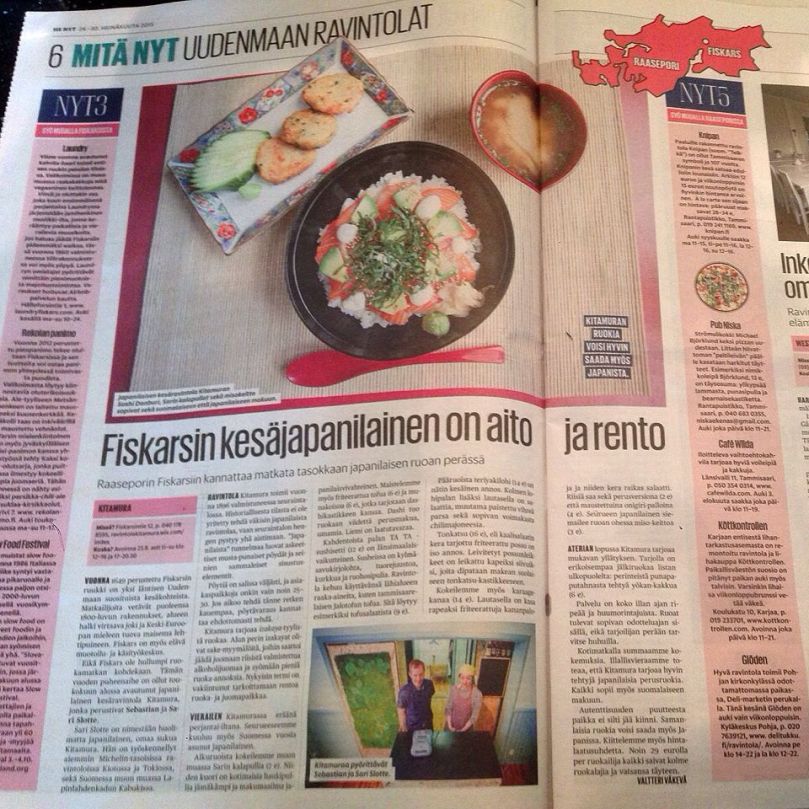
“Ravintola Kitamura” project is going very well. Thank you for all who support us. We have only 4 weeks left. There was review about “Ravintola Kitamura” in Helsingin sanomat Nyt liite last Friday. We were mostly fully booked weekend so far, but after this article, our restaurant is packed and we have to say many times “No, we are full” to customers who walk in or call us. I feel so sorry. However no way to take too many customers because I am making all of dishes with one more assistant in tiny kitchen. I really recommend to make booking for all of my blog readers who is considering to visit us. Thank you in advance for your cooperation. I will do my best to serve as much as possible customers with love.
Other media article about ravintola Kitamura this summer :


 One cold morning in March of 2013, I was in front of Kikunoi’s kitchen at 6:00.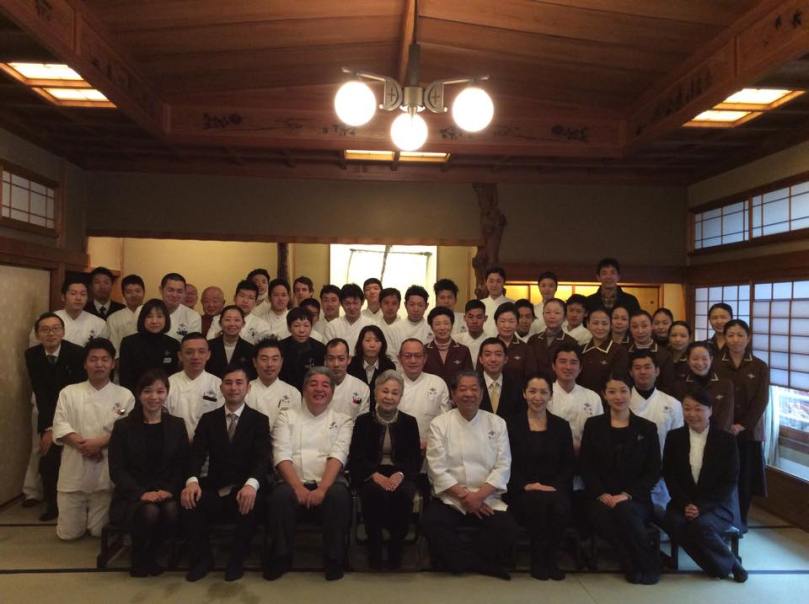
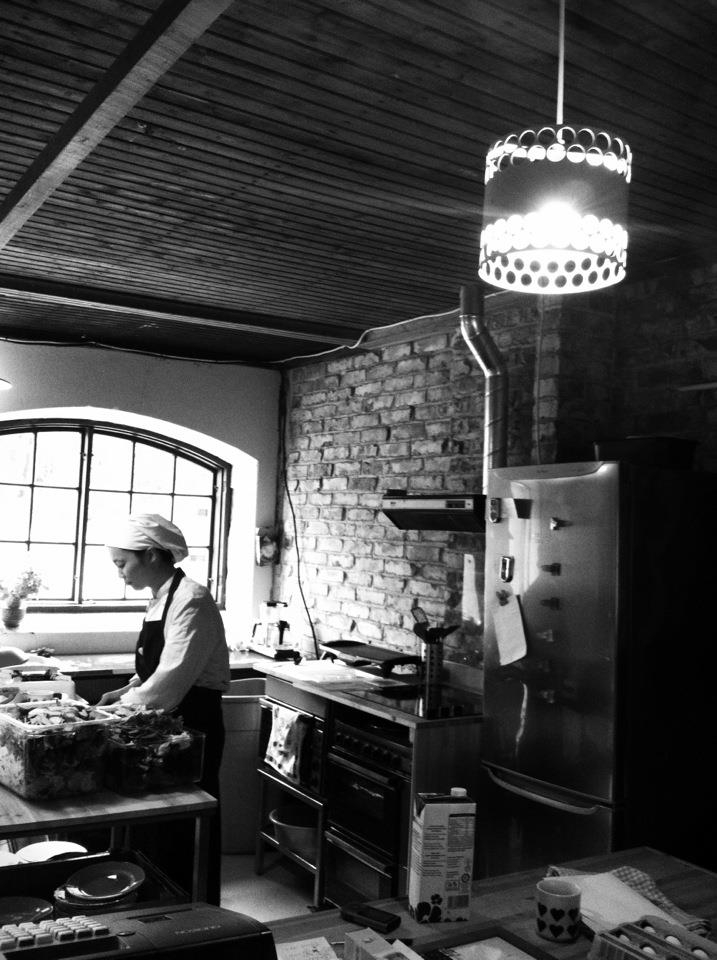
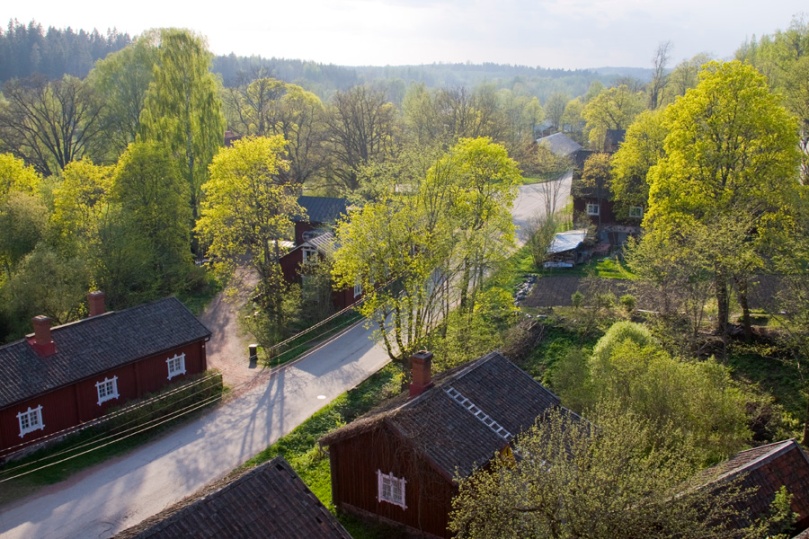
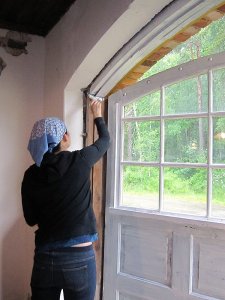 We renovated the barn by ourselves. We made the kitchen, dining hall and bath rooms. Leis is an excellent master builder who specializes in old houses renovation. Sebastian is also very good with his hands. I like the painting part of renovation.
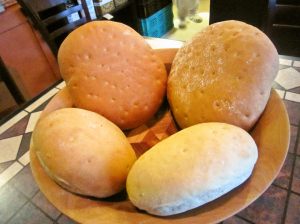 The slow food movement was growing in Finland at that time.We looked for the local producers. It was not easy to communicate with them. However we could find very nice products. Our hamburger pâte was made from 100%
 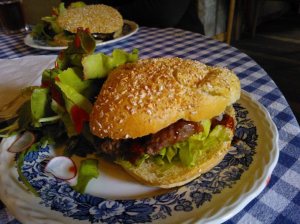 I planned a simple menu, but it was still difficult to decide recipes. Because I don’t eat fast food in general. Our menu had Teriyaki hamburger with wasabi mayonnaise, hot dog with curry cabbage and chili sin carne for vegetarian choice. Sebastian had a great idea to make a special potato side dish. Leif’s girlfriend Sanna made mouth watering chocolate cakes.
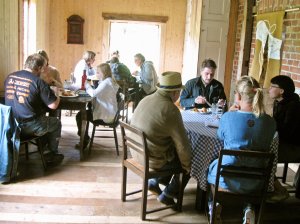 We invited the neighbours for testing on opening day in the end of June. And we asked guests to answer the enquete about food quality and price. Also we checked kitchen and service operation. I was chef in the kitchen. Sebastian was responsible for service, accounting and making charcoal grilled potato fire place. Leif, Sanna and their neighbor came to help washing dishes.